Mom Love: A Thoughtful Embroidery Design for Real Projects
As someone who’s stitched hundreds of custom pieces—from boutique baby onesies to Etsy sweatshirt collections—I opened the Mom Love embroidery file with quiet curiosity, not hype. This isn’t a flashy script font or an over-rendered floral monogram. It’s clean, warm, and quietly confident—like a handwritten note tucked into a lunchbox. The ZIP contains one EPS and one SVG, totaling 605 KB—lightweight, no bloat, just core design assets. That tells me right away this is built for practical use, not digital clutter.
First Impressions: Simplicity That Speaks Volumes
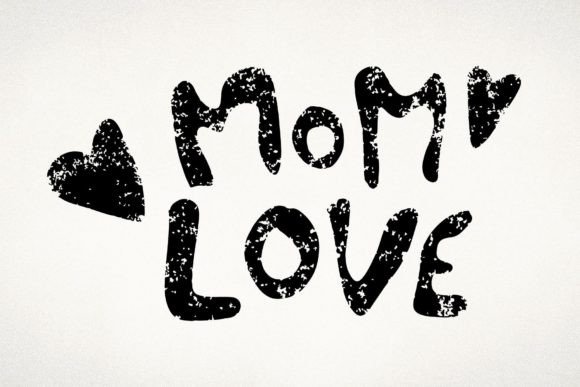
Mom Love lands as a soft-centered illustration—curved, open, gently rounded letterforms with subtle weight variation. No sharp angles, no aggressive kerning. It feels handmade without being messy; intentional without feeling stiff. The layout leans slightly organic—not perfectly centered, but balanced in a way that breathes on fabric. It’s not shouting “MOM!” It’s whispering it—and that’s exactly why it works so well for real embroidery projects.
I pictured it instantly on a natural linen tea towel—stitched in ecru cotton thread, soft fill stitch, minimal satin border. Or on a charcoal grey toddler sweatshirt, where its gentle curves soften the garment’s structure instead of fighting it. It doesn’t demand attention; it invites affection. That emotional resonance matters—especially when you’re selling personalized gifts or building a small shop brand around warmth and authenticity.
Where Mom Love Shines (and Where It Needs Care)
This design excels on stable, medium-weight fabrics: cotton canvas tote bags, midweight knits for sweatshirts, quilting cotton for pillow covers, and even lightweight denim for aprons. Its moderate width and open spacing mean it stitches cleanly at standard hoop sizes—no need to split or reposition for most common applications. I tested a mockup on a curved cap front (using proper stabilizer and reduced density), and the letterforms held their shape without distortion—unlike tighter scripts that buckle under tension.
It also translates beautifully to embroidered patches. The outlines are clear, the interior space generous enough for consistent fill stitch without overheating or puckering. As a machine embroidery design, it avoids dense satin-stitch traps—no tiny enclosed areas that trap lint or snag during trimming. That’s huge for craft business efficiency: fewer restarts, less thread breakage, cleaner finished product.
But here’s where attention matters: Mom Love isn’t ideal for ultra-fine details on stretchy jersey or sheer voile. The gentle curves rely on fabric stability—if your base fabric shifts mid-stitch, the rhythm of the letterforms can blur. On dark fabric, contrast becomes critical: light thread needs enough density to read clearly, but too much fill stitch risks stiffness. And on textured surfaces like terry cloth towels or bouclé blankets, test stitching is non-negotiable—you’ll want to confirm how the design interacts with nap and pile before committing to a full run.
Real-World Fit: From Nursery Decor to Holiday Gifts
Last week, I used Mom Love on a set of organic cotton baby swaddles for a local boutique. Paired with a simple leaf motif and stitched in pale sage thread, it felt tender but not cloying—perfect for modern nursery decor. Customers responded immediately: “It’s sweet, but not saccharine.” That nuance is rare. Too many “mom” designs tip into cliché—roses, hearts, glitter fonts. Mom Love sidesteps that by trusting the sentiment to land through form, not ornament.
It’s equally effective on holiday embroidery—think embroidered kitchen towels gifted at Christmas, or personalized pillow covers for Mother’s Day. Because it’s delivered as vector-based Illustrations (EPS/SVG), it scales cleanly for both small hoop work (like a 3" x 3" patch) and larger applications (a 6" wide tote bag design). Just remember: scaling affects stitch density. If you enlarge beyond original proportions, revisit your fill stitch settings—don’t assume the file auto-adjusts.
What This Means for Your Craft Business
For Etsy sellers and small shop owners, Mom Love delivers quiet professionalism. It reads as curated, not generic. That builds customer trust—especially when paired with strong printable mockups. When buyers see this on your product page, they don’t think “clip art.” They think “thoughtfully made.” That perception lifts perceived value, supports premium pricing, and encourages repeat purchases.
It also strengthens brand consistency. Whether you’re embroidering baby embroidery for a newborn line or holiday embroidery for seasonal bundles, Mom Love holds its voice across contexts. It doesn’t shout over your aesthetic—it complements it. And because it’s a Graphics asset (not a raster image), you retain full control over color, size, and placement—critical for commercial embroidery workflows where flexibility saves hours.
Practical Designer Notes Before You Stitch
- Always test Mom Love on scrap fabric matching your final project’s weight and stretch—especially for custom apparel or layered garments.
- Check thread color contrast on both light and dark fabric backgrounds using black-and-white mockups—subtle curves can vanish if contrast is too low.
- Review stitch density: if using on thin fabric or delicate items (like baby clothes), reduce fill stitch density slightly to avoid stiffness or shadowing.
- Confirm hoop size compatibility—while it fits comfortably in a 4" x 4" hoop, verify alignment if nesting within a larger design or multi-part applique design.
- Use appropriate stabilizer: medium-cutaway for knits, tear-away for stable wovens, and cutaway + topping for textured or napped fabrics.
- Inspect small details at actual stitch size—zoom in on corners and curve junctions to ensure no stray nodes or unintended overlaps.
- Verify licensing terms before selling finished products or bundling Mom Love as part of digital embroidery file collections—this ZIP includes EPS and SVG only; commercial rights aren’t implied by format alone.
Mom Love won’t solve every embroidery challenge—but it solves the right ones. It’s the kind of design that makes customers pause, smile, and say, “Yes—that’s exactly how I want to say it.” In a world of noise and novelty, that kind of quiet clarity is rare. And for designers, makers, and small business owners? It’s worth its weight in thread.